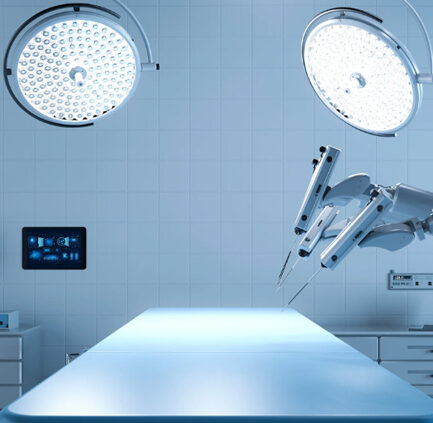


A Paris-based startup is developing a 1.8 mm-long robot designed to travel inside the brain.
Robeauté raised $28 million in January 2025 to develop its neurosurgical microrobot platform. The company’s first proposed application is collecting tissue samples for brain biopsies. Longer term, it is exploring whether the same platform could deliver drugs to brain tumors or place electrodes for neurological treatment.
The central idea is straightforward: instead of inserting a surgical instrument along a fixed, largely linear route, Robeauté wants a miniature robot to follow a planned path through brain tissue.
That remains an experimental proposition. Robeauté’s device is not FDA-cleared, does not have CE marking and is not approved for clinical use. The company has targeted human trials for 2026.
Still, the technology sits within a rapidly advancing area of medical research. Animal studies have tested robots moving through brain tissue, grain-sized devices have already been used in first-in-human brain cancer research, and U.S. government funding is now backing autonomous medical micro-robots.
The question is no longer whether miniature medical devices can work inside the body.
The harder question is whether a mobile robot can do so safely enough to improve on existing surgery.
Brain surgery has an access problem
The challenge in neurosurgery is often not identifying a target. Modern imaging can locate tumors, lesions and other abnormalities with high precision.
Getting to them is harder.
Conventional surgical instruments need a physical route into the brain. When a target sits deep inside the organ, that route may pass near critical tissue.
Robeauté’s approach is based on changing the geometry of access.
According to Fortune’s reporting, the company’s microrobot is designed to move through the brain’s extracellular matrix along a planned three-dimensional route. Rather than relying on a single straight trajectory, the system is intended to navigate around anatomical structures.
The robot is approximately 1.8 mm long. Robeauté’s broader platform combines the microrobot with surgical planning, imaging and navigation technology.
The company’s first target is the brain biopsy.
That choice matters because tumors are not always biologically uniform. Different regions can contain different cell populations and molecular characteristics. Robeauté has said its technology could eventually collect samples from multiple locations through a single entry point.
Whether that approach provides a clinical advantage remains to be demonstrated.
Tiny devices have already entered human brain research
The idea of grain-sized technology operating inside the brain is no longer entirely theoretical.
In 2023, researchers reported results from a first-in-human study involving miniature drug-releasing devices implanted into glioma tumors during surgery.
The study involved six patients.
The devices, approximately the size of a grain of rice, were inserted into the tumor and released small doses of different cancer drugs directly into surrounding tissue. They remained in place for roughly two to three hours before the tumor was removed.
This allowed researchers to examine how different regions of the same tumor responded to different drugs.
According to the U.S. National Institutes of Health, inserting and removing the devices was safe in the pilot study. The procedure added an average of 32 minutes to surgery, with no related adverse events reported during the immediate follow-up period.
The comparison with Robeauté is useful, but limited.
Those devices were placed directly into the tumor.
Robeauté’s technology is designed to solve the more difficult problem of getting a device to the target in the first place.
Can a robot move through brain tissue safely?
This is where the strongest independent evidence becomes important.
A recent peer-reviewed study by Bionaut Labs tested an untethered micro-robotic platform for navigation through brain tissue in living sheep. Researchers compared its tissue effects with those of standard neurosurgical catheter insertion.
The animals were followed for periods ranging from 24 hours to 26 weeks.
Researchers reported no deaths or surgical complications. They also found no neurological or behavioral differences between the groups and no significant differences in gross or microscopic tissue pathology between channels created by the micro-robot and those created by the catheter.
That is meaningful preclinical evidence, but it is still animal research.
A sheep brain is not a human brain, and the study does not establish the safety of mobile robots in human neurosurgery.
What it does show is that the basic concept of moving a miniature device through brain tissue can be tested against existing surgical approaches and measured for tissue effects.
That is a much stronger foundation than a demonstration in a laboratory model alone.
The $28 million bet on a new surgical route
Robeauté announced its $28 million funding round in January 2025. The round was led by Plural, Cherry Ventures and Kindred Ventures, with participation from LocalGlobe, Think.Health, APEX Ventures and strategic investor Brainlab.
The company said the funding would support technology development, expansion in the United States and preparation for human clinical testing.
But the funding announcement should not be confused with clinical validation.
Robeauté’s own website states that its device has not been evaluated by the FDA, has not received FDA clearance, does not have CE marking and is not commercially available.
That distinction is critical because medical robotics often receives attention at the prototype stage, years before a system has demonstrated clinical benefit.
For Robeauté, the next meaningful data will come from human studies.
The key questions are practical: Can the robot reach its intended target? Can clinicians track it reliably? Can it perform a useful procedure? And does it offer a measurable advantage over existing biopsy or treatment methods?
Medical micro-robots are attracting serious investment
Robeauté is not alone in pursuing miniature medical robots.
In August 2026, Stanford University announced an award of up to $27.2 million over five years from the U.S. Advanced Research Projects Agency for Health for an AI-powered autonomous micro-robot program.
Stanford’s technology addresses a different problem. Its magnetic milli-spinner microbot, or M3bot, is designed to travel through blood vessels rather than brain tissue.
The research team says the current robot can travel at upto 55 centimetres per second. In experimental work, its spinning mechanism reduced blood clot volume by as much as 95% by mechanically compressing the clot before removal.
Renee Zhao, the Stanford mechanical engineering professor leading the project, described the objective as reaching disease sites that existing catheter technologies cannot access.
That is also the broader argument behind Robeauté’s technology.
The value of microrobotics is not simply miniaturisation. It is access.
A conventional catheter can only travel where the anatomy allows it. A miniature robotic system could, in principle, navigate through routes that larger instruments cannot follow.
For Robeauté, that means moving through brain tissue toward a specific target. For Stanford, it means navigating complex blood vessels.
The technologies differ, but the engineering problem is similar: reaching disease sites without relying entirely on the physical limitations of conventional instruments.
A smaller robot creates bigger technical challenges
Miniaturisation does not make surgery automatically safer.
It introduces a new set of problems.
A robot operating inside the brain must be accurately tracked throughout the procedure. It needs a reliable method of propulsion and control. The system must account for mechanical failure, navigation errors and the possibility that the robot may need to be retrieved.
The safety threshold is particularly high in the brain.
Even a small navigation error can have serious consequences depending on where the robot is operating.
The path from a successful prototype to a medical device therefore depends on more than engineering. Companies must demonstrate reproducibility, biological safety and clinical value.
A robot also has to justify its existence.
If a conventional biopsy needle can safely reach a target, a microrobot must show why its additional complexity produces a better outcome.
That could mean reaching previously inaccessible areas, reducing tissue disruption, collecting more informative samples or enabling treatments that existing tools cannot deliver.
Without that advantage, miniaturisation alone is not enough.
What happens next for Robeauté?
The company’s next major test is clinical.
Robeauté announced plans to begin human trials in 2026. If those studies proceed, they will provide the first meaningful evidence of whether its technology can move from an engineering concept to a clinical tool.
The results will matter more than the robot’s size.
The central issue is whether a 1.8 mm device can safely navigate inside a human brain and perform a procedure that existing tools cannot perform as effectively.
That is the standard the technology will ultimately be judged against.
Robeauté’s $28 million funding round shows that investors believe the question is worth pursuing. Independent research has also begun to generate evidence around mobile devices in brain tissue, while miniature implants have already entered early human studies.
But none of those developments make mobile brain robots a standard part of neurosurgery.
Not yet.
The field has reached the point where the engineering is becoming credible. The next challenge is proving the medicine.
Sources
- https://www.techspot.com/news/106402-robots-size-rice-grains-aim-revolutionize-brain-surgery.html
- https://fortune.com/2025/01/13/exclusive-robeaute-venture-capital-funding-28-million-microrobot-brain-surgery/
- https://robeaute.com/news-updates/robeaute-raises-28-million-usd-to-transform-brain-health
- https://robeaute.com/
- https://pmc.ncbi.nlm.nih.gov/articles/PMC12134885/
- https://pubmed.ncbi.nlm.nih.gov/40469320/
- https://www.nih.gov/news-events/nih-research-matters/tiny-implanted-devices-give-insights-treating-brain-tumors
- https://pmc.ncbi.nlm.nih.gov/articles/PMC10754230/
- https://news.stanford.edu/stories/2026/08/renee-zhao-grant-ai-powered-micro-robot