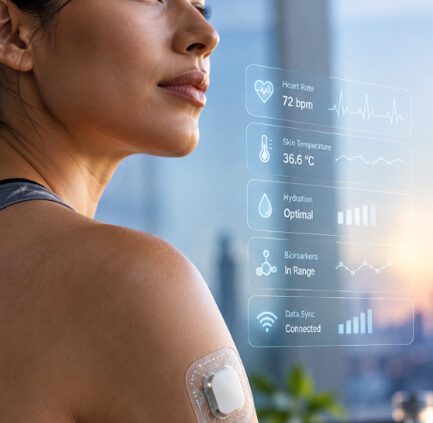


Medical technology in 2026 is moving beyond devices that simply diagnose, monitor or treat.
The newer generation of medical technologies is increasingly combining artificial intelligence, sensors, software, robotics, connectivity and advanced materials in a single clinical system.
The change can already be seen in products cleared or approved by the U.S. Food and Drug Administration (FDA), as well as in technologies recognized through the 2026 Edison Awards.
But the more important question is not which products won awards.
It is where medical technology is actually moving.
Several developments this year point to the same direction: AI is moving deeper into clinical workflows, devices are beginning to respond to real-time physiological data, surgical robotics is becoming more specialized, and implantable technologies are becoming increasingly connected.
At the same time, regulators are having to rethink how medical devices powered by rapidly changing AI systems should be evaluated.
- AI Is Moving From Detection to Clinical Decision Support
Artificial intelligence in medical devices is no longer limited to identifying an abnormal scan. One of the clearest examples is coronary artery disease.
HeartFlow’s Plaque Analysis uses coronary CT angiography data to generate information about coronary plaque. The FDA’s 510(k) record for HeartFlow Analysis identifies it as coronary vascular physiologic simulation software and records a substantial-equivalence decision in July 2025.
The technology is also generating clinical data at considerable scale.
In July 2026, HeartFlow reported results from datasets involving more than 36,000 patients at the Society of Cardiovascular Computed Tomography’s annual meeting. The company reported that more than 50% of symptomatic patients with zero coronary artery calcium in the reported datasets had significant non-calcified plaque. That is a company-reported finding from the datasets presented at the meeting, not an independent FDA conclusion.
That distinction matters.
A calcium score can indicate the presence of calcified plaque, but it does not tell the complete story about non-calcified plaque. AI-based analysis of CT images can therefore add another layer of information to an examination that clinicians already use.
The broader trend is straightforward:
AI is increasingly being used to extract more clinically relevant information from existing medical data.
That makes the technology more useful than an algorithm that simply produces an “abnormal” or “normal” result.
- AI Is Becoming Part of the Workflow, Not Just the Algorithm
The next step is getting AI output into the hands of the clinician at the right moment.
The 2026 Edison Awards recognized Viz Hemorrhage with Gold in the AI-Augmented Diagnostics category. Edison describes the system as using AI to analyze non-contrast CT scans, identify suspected brain hemorrhage and provide measurements and visual information for clinical review.
Another example is NeuroMatch, which received Silver recognition in the same category.
According to the Edison Awards, NeuroMatch is a cloud-based AI platform that automates parts of EEG review, including artifact removal and detection of spikes and seizures. Edison says the system is designed to reduce interpretation time from hours to minutes.
The important development here is not simply that AI can analyze medical data.
It is that AI is increasingly being designed around the clinical workflow.
The practical sequence becomes:
medical data → AI analysis → clinically relevant finding → clinician review → action
That distinction will become increasingly important as hospitals evaluate AI products.
A highly accurate algorithm that does not integrate into the way clinicians actually work may have limited practical value.
The FDA itself has highlighted this problem. In its work on evaluating AI-enabled medical devices, the agency has noted that changes in patient populations, clinical practice, data inputs and healthcare infrastructure can affect AI performance. These changes can contribute to what regulators call data drift or model drift.
So the challenge in 2026 is no longer simply building an accurate model.
It is keeping that model reliable in the real world.
- Generative AI Is Now Becoming a Regulatory Question for Medical Devices
The regulatory discussion becomes even more complicated when the AI is generative.
In August 2026, the FDA released a discussion paper titled “Considerations for the Regulation of Generative AI-Enabled Medical Devices.”
The agency said the paper is intended to engage stakeholders on the challenges associated with generative-AI-enabled medical devices and possible approaches to addressing them.
This is significant because conventional medical-device software is generally designed to perform defined functions.
Generative AI can produce variable outputs and may behave differently as models, data or implementation environments change.
That raises a difficult regulatory question:
How should a medical device be evaluated when its output is not completely predictable in the way traditional software is?
The FDA’s discussion paper is therefore important not because it establishes a new approval pathway, but because it shows that regulators are actively considering whether existing approaches are sufficient for generative AI.
The issue extends beyond approval.
Developers also have to consider how performance will be monitored after a product reaches the market.
That makes lifecycle management increasingly important for AI-enabled medical devices.
- Medical Devices Are Becoming Responsive, Not Just Diagnostic
Another important change is happening at the hardware level.
Medical devices are increasingly being designed to sense a physiological condition and respond to it.
Boston Scientific’s Asurys Fluid Management System is one example.
The FDA’s 510(k) record shows that Asurys received a substantial-equivalence decision on March 27, 2026.
The system is designed to work with Boston Scientific’s LithoVue Elite system and regulate irrigation during urological procedures based on intrarenal pressure information.
This is a different model of device design.
Instead of:
measure → display → clinician responds
the technology moves closer to:
measure → software interprets → device responds
That architecture can potentially reduce the amount of manual intervention required during a procedure.
But it also creates another layer of engineering and regulatory complexity.
When software controls a physical response, developers have to consider not only whether the sensor is accurate, but also whether the software makes the correct decision and whether the device responds safely.
- Surgical Robotics Is Becoming More Specialized
Surgical robotics is also moving away from the idea that every robotic system needs to perform the same type of task.
The focus is increasingly on specific procedures where precision is particularly difficult to achieve manually.
The 2026 Edison Awards recognized Medical Microinstruments’ Symani Surgical System in the Surgical Robotics & Precision Therapy category. The system is designed for open microsurgery, including procedures involving extremely small anatomical structures.
The same category included Alcon’s UNITY Vitreoretinal Cataract System and Arthrex’s Synergy Power System.
This suggests a broader shift in the robotics market.
The competitive question is becoming less about whether a device is “robotic” and more about:
What clinical problem does the robotics solve better?
For microsurgery, the value may lie in movement precision.
For ophthalmology, it may be improved control and efficiency.
For orthopedics, it may be power, ergonomics or procedural consistency.
The technology is becoming increasingly procedure-specific.
- Implantable Devices Are Becoming Connected Systems
Implantable medical devices are also changing.
Consider Abbott’s Liberta RC Deep Brain Stimulation System.
The FDA’s PMA record identifies the system as including the Liberta RC implantable pulse generator, charger, patient controller application and clinician programmer application, including the NeuroSphere Virtual Clinic. The relevant supplement was approved in January 2024.
That is important because the implant is only one component of the overall system.
The technology combines:
implant + software + programming + charging + remote clinical infrastructure
This is a very different product architecture from a traditional implant that operates largely as an isolated device.
Medtronic’s Altaviva System shows a similar evolution in another therapeutic area.
The FDA approved Altaviva for the treatment of urge urinary incontinence in patients who had failed or could not tolerate more conservative treatments. The approval is tied to clinical trial NCT05226286.
The FDA record also shows that the product has multiple post-approval supplements and ongoing post-market activity.
This highlights an important feature of modern implantable technology:
the evidence lifecycle does not necessarily end when the device receives market authorization.
Long-term safety, performance and clinical outcomes can continue to be monitored after commercialization.
- Point-of-Care Manufacturing Is Getting More Sophisticated
Not every major medical-technology development involves AI or robotics.
Manufacturing itself is changing.
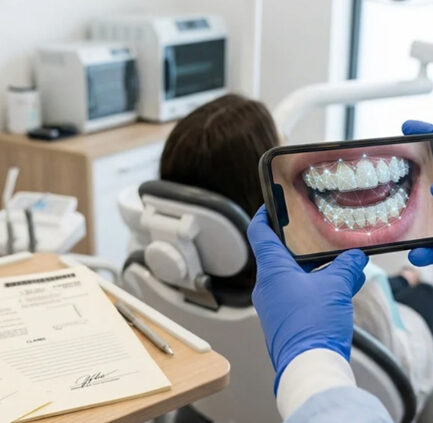
The 2026 Edison Awards recognized SprintRay MIDAS, an AI-enabled dental 3D-printing platform, with Gold.
The technology is designed to bring digital design and manufacturing into the dental practice rather than relying entirely on centralized laboratories.
That represents a broader shift toward digital-to-physical healthcare.
Instead of:
scan → send data → centralized manufacturing → shipping → treatment
the workflow can increasingly become:
scan → digital design → local manufacturing → treatment
The implications extend beyond dentistry.
As 3D printing becomes more capable, medical-device companies can potentially use digital manufacturing for customized components, patient-specific products and shorter production cycles.
For regulators and IP teams, however, this also changes the technology being protected.
The relevant innovation may not be only the physical product.
It may include the software used to design it, the manufacturing parameters, the printing process, the material formulation and the digital workflow connecting them.
- Women’s Health Is Producing More Specialized Medical Technologies
Women’s health is another area where device development is becoming increasingly targeted.
The 2026 Edison Awards recognized HemoSonics’ Quantra Hemostasis System for Obstetrics with Silver.
The system uses viscoelastic testing to provide information about a patient’s coagulation status during obstetric care.
This is particularly relevant in situations where clinicians need rapid information to guide treatment.
The underlying trend is broader than one device.
Medical technology is increasingly being designed around specific clinical populations and specific points in the care pathway, rather than developing general-purpose technology and adapting it later.
That approach can produce more targeted devices, but it can also create more specialized regulatory, clinical and IP requirements.
- Advanced Materials Remain a Major Part of Medical Innovation
The excitement around AI can sometimes obscure another important part of medical technology: materials science.
The 2026 Edison Awards recognized Dow’s Non-PVC, Non-phthalate Medical Films in the Health, Medical & Biotech program.
The materials are intended for applications including IV and dialysis bags.
This is a reminder that innovation in healthcare does not always look like a robot or an AI system.
Material selection can affect:
- biocompatibility;
- flexibility;
- durability;
- sterilization;
- chemical resistance;
- manufacturing; and
- patient safety.
For many medical products, the material itself can be central to performance.
That makes materials patents, manufacturing know-how and freedom-to-operate analysis relevant alongside device and software patents.
What These Trends Mean for Medical-Device IP
There is a common thread running through all of these developments.
The medical device is becoming a technology stack.
A single product may now involve:
| Technology layer | What it can cover |
| Hardware | Implant, robot, imaging or therapeutic device |
| Sensors | Pressure, physiological or imaging data |
| Software | Control, processing and user interfaces |
| AI | Detection, classification or prediction |
| Connectivity | Remote programming and data exchange |
| Clinical workflow | Alerts, decision support and coordination |
| Materials | Polymers, coatings and other advanced materials |
| Manufacturing | 3D printing and specialized production processes |
That has direct implications for intellectual property.
A company developing an AI-enabled medical device may need to examine more than patents covering the physical device.
The relevant landscape can include sensor configurations, image-processing techniques, software workflows, AI implementations, connectivity systems, manufacturing processes and clinical-use methods.
The same applies to connected implants and robotic systems.
A freedom-to-operate assessment that stops at the physical device may therefore miss important parts of the technology stack.
What Comes Next?
The most important medical-technology story in 2026 is not one breakthrough product.
It is the convergence of technologies that were previously developed separately.
AI is becoming part of diagnostic workflows.
Sensors are allowing devices to react to physiological information.
Robotics is becoming more specialized.
Implants are becoming connected.
Digital manufacturing is moving closer to the point of care.
And regulators are beginning to address what happens when medical devices incorporate generative AI.
The FDA’s AI-enabled device framework and its 2026 discussion paper on generative AI show that regulation is having to evolve alongside the technology.
The 2026 Edison Awards provide another snapshot of this shift. Its Health, Medical & Biotech finalists span AI diagnostics, surgical robotics, advanced clinical systems, point-of-care therapeutics, precision health, medical delivery and women’s health. The awards say finalists are selected through a peer-based voting process involving executives, academics and innovation leaders.
But awards are only one signal.
The more important signal is what is already reaching regulators, hospitals and patients.
For medical-device companies, that means the innovation question is becoming increasingly complex:
What exactly is the invention?
And from an IP perspective, an equally important question follows:
Which parts of that technology stack need to be protected?
Sources
- https://www.fda.gov/medical-devices/software-medical-device-samd/artificial-intelligence-enabled-medical-devices
- https://www.fda.gov/regulatory-information/search-fda-guidance-documents/artificial-intelligence-enabled-device-software-functions-lifecycle-management-and-marketing
- https://www.fda.gov/medical-devices/digital-health-center-excellence/request-public-comment-measuring-and-evaluating-artificial-intelligence-enabled-medical-device
- https://www.fda.gov/regulatory-information/search-fda-guidance-documents/marketing-submission-recommendations-predetermined-change-control-plan-artificial-intelligence
- https://www.fda.gov/medical-devices/software-medical-device-samd/good-machine-learning-practice-medical-device-development-guiding-principles
- https://www.fda.gov/medical-devices/digital-health-center-excellence
- https://www.accessdata.fda.gov/scripts/cdrh/cfdocs/cfpmn/pmn.cfm?ID=K250902
- https://ir.heartflow.com/news-releases/news-release-details/new-data-scct-2026-reinforce-heartflow-plaque-analysis-standard
- https://www.accessdata.fda.gov/cdrh_docs/pdf25/K250902.pdf
- https://www.accessdata.fda.gov/scripts/cdrh/cfdocs/cfpmn/pmn.cfm?id=K251273
- https://news.bostonscientific.com/2026-03-30-Boston-Scientific-receives-FDA-clearance-for-the-Asurys-TM-Fluid-Management-System
- https://www.accessdata.fda.gov/scripts/cdrh/cfdocs/cfpma/pma.cfm?ID=P140009S087
- https://www.abbott.com/en-us/corpnewsroom/products-and-innovation/liberta-rc-dbs-system-is-fda-approved-3-things-to-know
- https://www.accessdata.fda.gov/scripts/cdrh/cfdocs/cfpma/pma.cfm?id=P240011
- https://www.accessdata.fda.gov/scripts/cdrh/cfdocs/cfpma/pma_pas.cfm?c_id=8512&t_id=819630
- https://www.medicaldesignandoutsourcing.com/medical-device-innovations-2026-edison-awards-winners/
- https://corporate.dow.com/en-us/about-dow/awards/edison-awards.html
- https://corporate.dow.com/en-us/news/press-releases/dow-honored-with-six-wins-in-the-2026-edison-awards.html
- https://www.alcon.com/media-release/alcon-elevates-vitreoretinal-and-cataract-surgery-superior-efficiency-unity-vcs-and/