


The Gut Hormone Reshaping the Yogurt Industry
GLP-1 drugs made a gut peptide famous. Now food companies are racing to harness the same biology and probiotic yogurt is the most credible vehicle they have.
When semaglutide became a household name in 2023, it didn’t just transform obesity medicine, it educated a mass audience about a hormone most had never heard of. Glucagon-like peptide-1 (GLP-1) is secreted naturally in the gut, and its role in suppressing appetite, regulating blood sugar, and controlling body weight turns out to be enormous. By 2025, the drug class built around that hormone was generating over $50 billion in annual pharmaceutical revenues.
Interest in GLP-1 Probiotic Yogurt has accelerated as researchers and food manufacturers explore ways to naturally support appetite regulation and metabolic function through targeted microbiome interventions.
The food industry watched. And a compelling question emerged: if a synthetic version of this hormone commands that kind of value, what is the market potential for food products that stimulate the body to produce it naturally?
|
$50B+ GLP-1 drug revenues in 2025 (pharmaceutical) |
90%+ Of serotonin is produced in the gut |
1 Trillion+ Beneficial microbes in the human gut |
8–12 wks Minimum trial duration for meaningful microbiome remodeling effect |
For consumers seeking dietary approaches rather than pharmaceuticals alone, GLP-1 Probiotic Yogurt represents an emerging category where fermentation science, prebiotic fibers, and beneficial bacteria converge to promote gut health and metabolic wellness.
The mechanism: How a spoonful of yogurt can shift your appetite hormones
The pathway from yogurt to GLP-1 secretion runs through the gut microbiome. Prebiotic fibers, inulin, galacto-oligosaccharides (GOS), soluble corn fiber (SCF), pectin pass undigested into the colon, where resident bacteria ferment them into short-chain fatty acids (SCFAs), primarily butyrate and propionate. Those SCFAs bind to FFAR2 and FFAR3 receptors on enteroendocrine L-cells in the ileum and colon, triggering GLP-1 secretion. This is the best-validated dietary pathway to endogenous GLP-1 elevation.
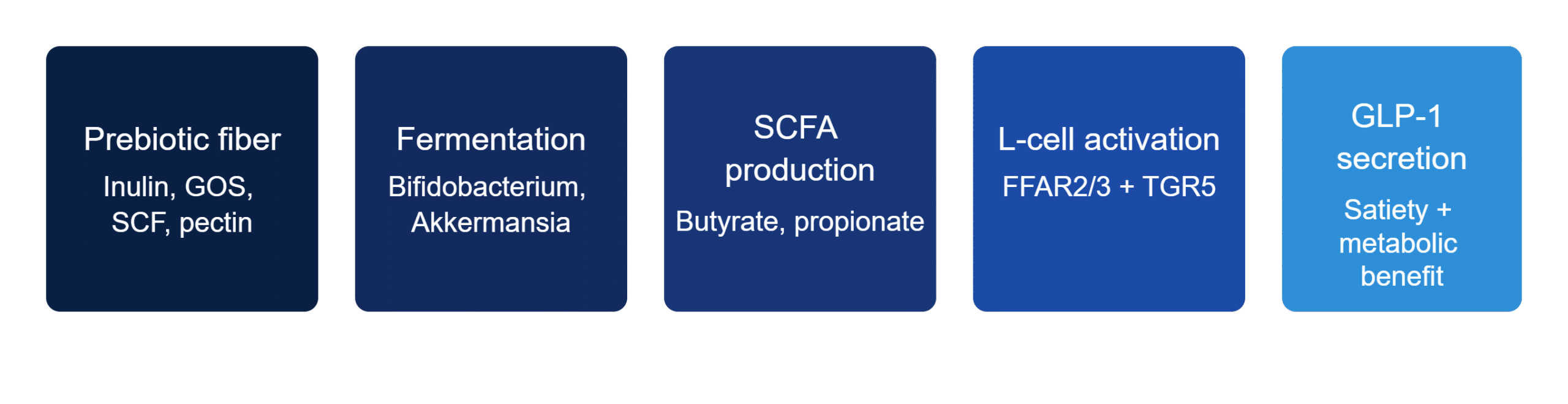
Not all fibers are equal in this pathway. Long-chain chicory inulin (HP grade) outperforms short-chain fructooligosaccharides (FOS) at identical doses because it ferments preferentially in the distal colon exactly where L-cell density is highest. And the combination of a specific prebiotic fiber with a matched probiotic strain consistently outperforms either ingredient alone.
Sustained prebiotic intake also selectively enriches two bacterial species independently correlated with higher fasting GLP-1 levels: Akkermansia muciniphila and Bifidobacterium longum. This cumulative microbiome remodeling is why 8–12 week clinical trials consistently outperform shorter studies, the benefit compounds over time.
The Strains Receiving the Most Attention
Not all probiotics are equal.
Their effects are highly strain-specific.
Several bacterial groups are attracting significant interest in metabolic-health applications:
Bifidobacterium Species
Bifidobacteria are among the most studied probiotic organisms.
Evidence suggests they may contribute to improved metabolic parameters, insulin regulation, and modest weight-management benefits.
Among them, Bifidobacterium animalis subsp. lactis HN019 has been investigated for gastrointestinal, inflammatory, and metabolic outcomes. Studies have reported benefits related to inflammation, lipid metabolism, bowel function, and metabolic syndrome markers.
Clinical discussions around gut response GLP-1 support reviews increasingly focus on how specific probiotic strains may influence satiety-related signaling, although outcomes can vary depending on formulation and study design.
Akkermansia muciniphila
Perhaps the most talked-about next-generation probiotic.
Emerging evidence suggests Akkermansia may influence metabolic health through multiple mechanisms, including effects on GLP-1 secretion and gut barrier function.
Multi-Strain Synbiotic Systems
Increasingly, innovation is shifting away from single strains toward combinations of:
These systems aim to maximize SCFA production and create more consistent metabolic responses.
The Rise of Synbiotic Yogurt Formulations
The future may belong not to probiotics alone, but to synbiotics.
A synbiotic combines:
This approach addresses a major challenge in microbiome science:
Introducing bacteria does not guarantee colonization or activity.
Providing the appropriate nutritional substrate increases the likelihood that beneficial microbial pathways will become active.
For GLP-1-focused products, the objective is clear:
Increase production of SCFAs that can influence enteroendocrine signaling.
This is why resistant starches, inulin, fructooligosaccharides, galactooligosaccharides, and other fermentable fibers are becoming common components of next-generation yogurt formulations.
This biological pathway is one reason why developers of GLP-1 Probiotic Yogurt formulations are emphasizing microbiome-targeted ingredients designed to enhance endogenous hormone signaling instead of directly supplying GLP-1.
Fermented dairy products such as kefir are also being explored alongside advanced yogurt formulations because they provide diverse microbial communities that may complement synbiotic strategies.
Patent landscape: An IP race in fast-forward
The patent data tells a story of a category moving rapidly from curiosity to competition. Filings in this space were sparse before 2015. Then came a sharp inflection in 2019, driven by advances in microbiome science and growing commercial confidence. By 2024–2025, annual filings had reached their highest-ever levels, 9 applications filed in each of those years.
Applications filed, Grants published
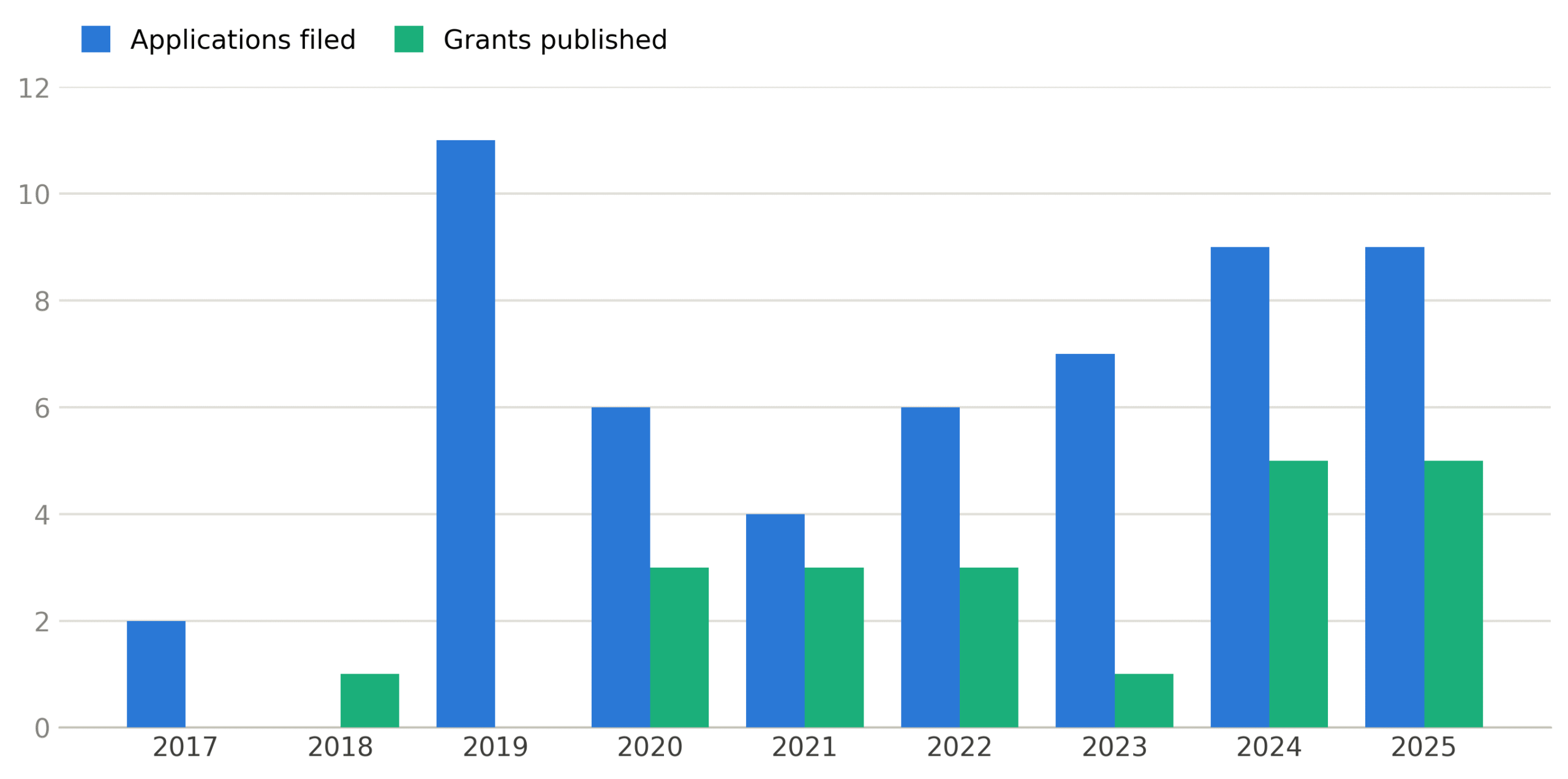
Of the 85 patents tracked in the landscape, 45 are active and granted, a high granted-to-pending ratio that signals increasing patent office acceptance of these technologies. Only 6 have expired, meaning the bulk of competitive protection is still intact and shaping the field.
IP signal: The continued absence of a filing decline, despite rising grant numbers, means this technology space is far from saturation. Companies filing now can still establish defensible positions but the window is narrowing as formulation claims become more tightly contested.
Competitive geography
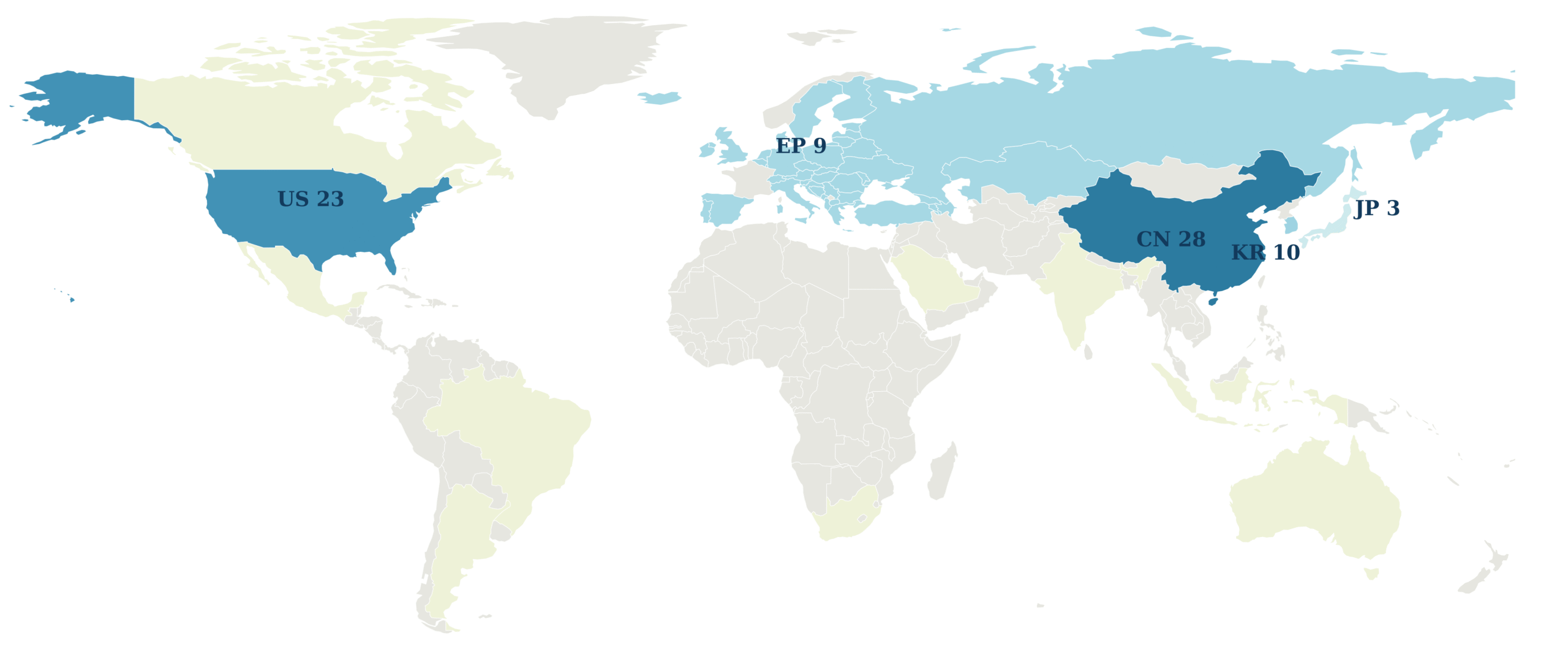
China leads filings; the US leads commercial maturity
China leads all jurisdictions with 28 patent filings, driven predominantly by probiotic ingredient companies (12 filings) and dairy companies (11 filings), a combination that signals aggressive commercialization intent rather than exploratory R&D. The United States follows with 23 filings and the most balanced ecosystem across assignee types. South Korea’s 10 filings punch above the country’s market size, reflecting specialized strength in fermentation engineering.
Europe’s 9 filings reflect stricter regulatory scrutiny around health claims but also a commercially proven template in Japan’s FOSHU framework, which Western brands have systematically under-leveraged. Average time to patent grant varies dramatically: Korea clocks just 7 months; the US takes 63; Europe requires 107; and the Eurasian Patent Organization averages 124 months.
Who’s innovating: Ingredient companies are outrunning dairy incumbents
The most important structural signal in the patent landscape is who holds the IP.
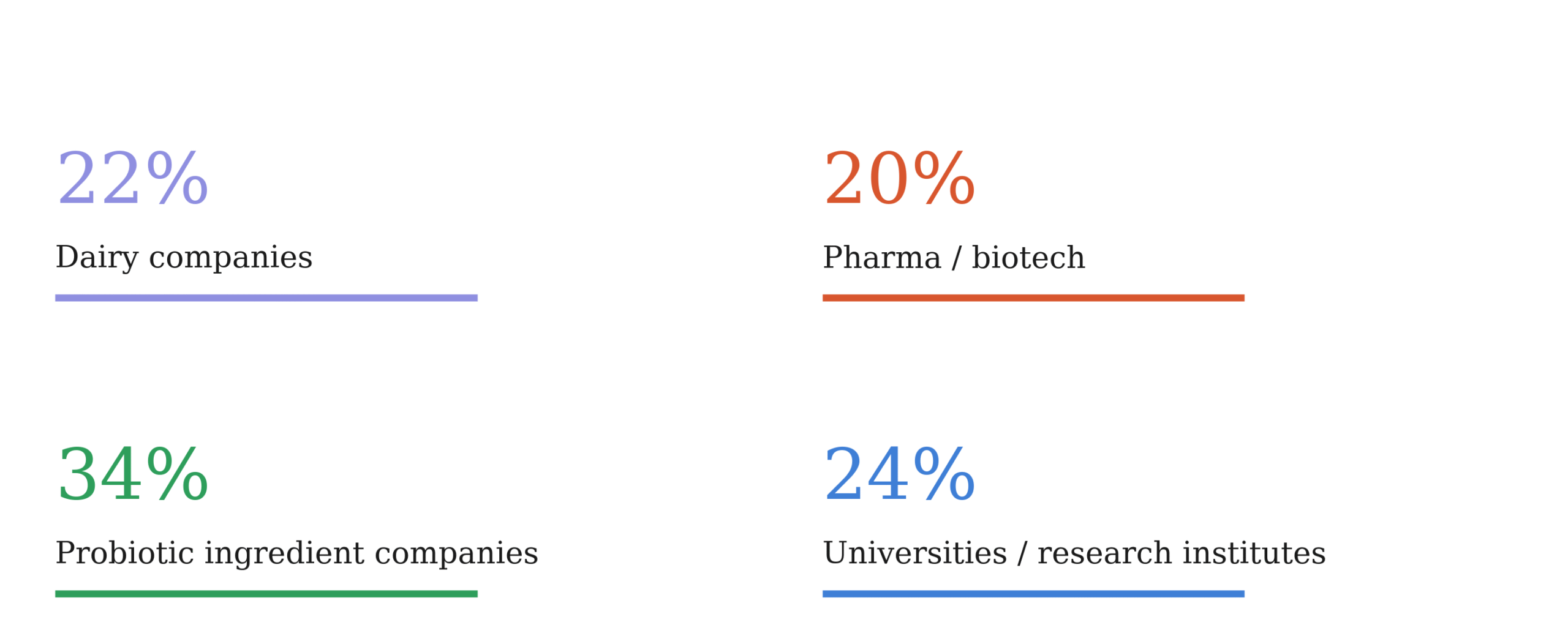
The practical implication: dairy companies that want to compete in this premium category increasingly need to license ingredient IP rather than develop it in-house or accelerate their own strain research before ingredient players lock up the most defensible positions. The entry of Harvard and MIT (via WO2025235433A1) alongside European hospital consortia (AP-HP et al., EP4619504A1) signals that academic validation pipelines are feeding commercial claims with growing speed.
Market opportunity
North American launches are anchored by Soluble Corn Fiber (SCF) favored for its clean taste profile and processing stability. Europe leans on chicory inulin and FOS. Plant-based innovation is bifurcating between premium SKUs built around acacia fiber and GOS, and mass-market oat-based products that prioritize volume over metabolic differentiation.
|
🇮🇳 India is the single largest untapped opportunity in the category. A 1.4 billion person market with deep dahi culture, a rising metabolic disease burden, and as of this report zero major SKUs carrying a prebiotic GLP-1 positioning. Major players including Amul, Mother Dairy, Heritage, Verka, and Milky Mist add probiotic cultures but generally do not add prebiotic fiber. Epigamia is the sole exception, declaring Pectin as a prebiotic ingredient. |
As awareness grows, premium GLP-1 Probiotic Yogurt products may increasingly differentiate themselves by combining clinically studied fibers and probiotic strains with messaging centered on gut health and metabolic support.
Private label is also disrupting faster than anticipated. Kroger, Tesco, and Rewe have each launched prebiotic yogurt tiers within 18 months of category creation by branded players, the fastest private-label response rate in any functional food segment. This creates urgency for branded innovators: the window to establish a premium positioning before private-label compression arrives is measurably short.
The bottom line: Food as adjunct therapy not competitor to Ozempic
The strategic framing matters. Probiotic yogurt formulated for GLP-1 support is not attempting to replicate pharmaceutical efficacy. It is occupying the metabolic health aspiration that GLP-1 drugs made legible to a mass audience, people who want to eat their way toward better satiety and metabolic outcomes, not just manage symptoms with injections.
The ingredients exist. The science is validated. The consumer vocabulary has been built by $50 billion worth of pharmaceutical advertising. What remains is execution: the right fiber, at the right dose, with the right probiotic strain, communicated with claims that regulatory frameworks particularly Japan’s FOSHU model have already proven commercially viable.
Key formulation principle: Long-chain chicory inulin (HP grade) outperforms short-chain FOS at identical doses due to preferential fermentation in the distal colon. Dose, fiber type, and strain selection are the central competitive variables not probiotic count alone.
Rather than competing with prescription medicines, GLP-1 Probiotic Yogurt is emerging as a functional food category aimed at supporting natural physiological pathways through evidence-based nutritional interventions.
The opportunities extend far beyond what we’ve covered here. Explore the full report on our website for a detailed analysis of the science, innovation landscape, patent activity, competitive dynamics, and market forces shaping the future of GLP-1-focused functional foods.
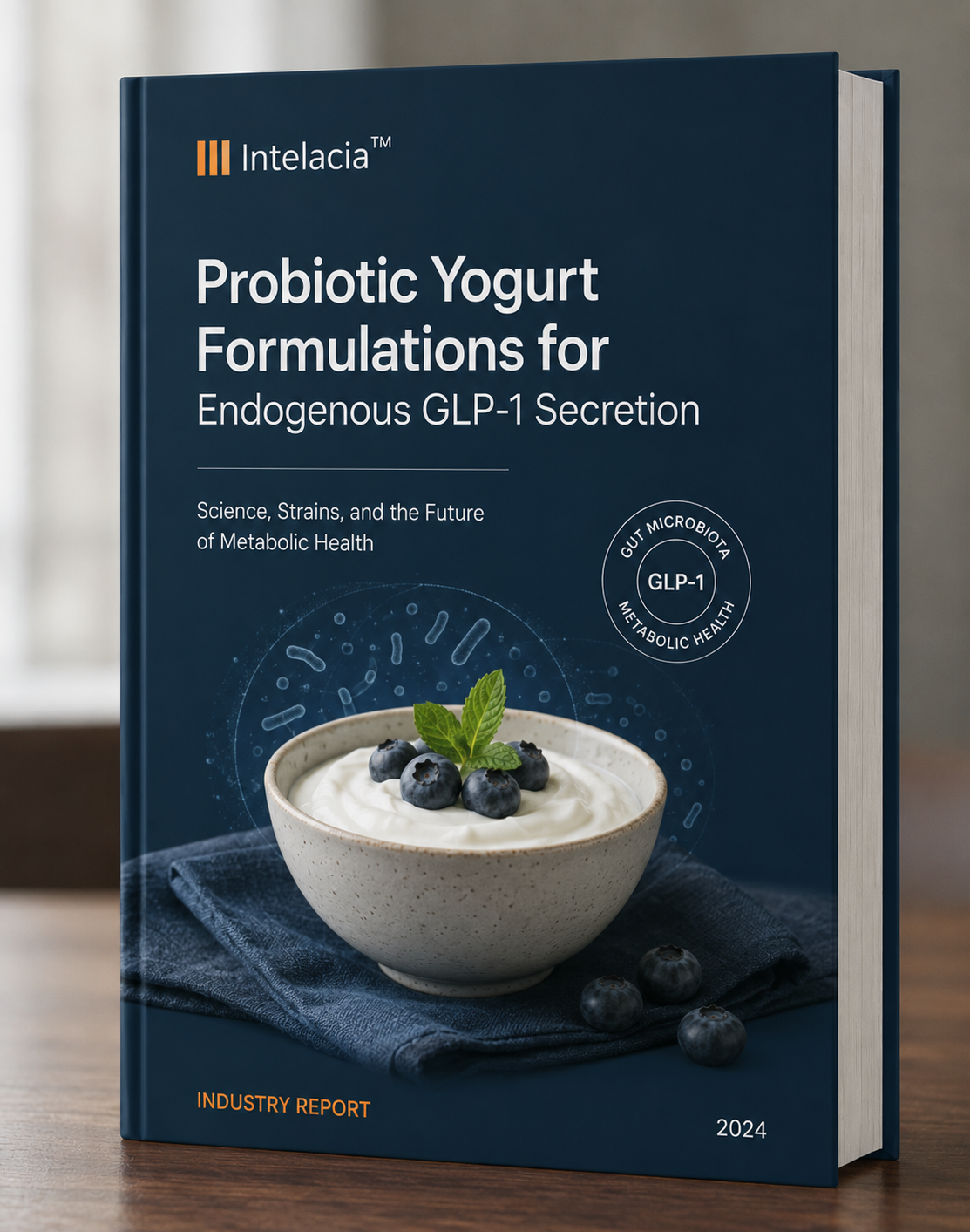
Download Report
Download Report

Download Report