


In the spring of 1993, a mysterious illness began killing young, healthy people in the Four Corners region of the American Southwest. Within weeks, investigators at the CDC had identified the culprit: Sin Nombre virus, a previously unknown hantavirus spread through the droppings of deer mice. Thirty-three years later, the global medical community still has no approved antiviral therapy specifically licensed to treat it.
While experts generally do not classify hantavirus as a likely global pandemic threat because most strains lack sustained human-to-human transmission, discussions around a potential Hantavirus pandemic continue to attract attention due to the disease’s high mortality and zoonotic origins. Assessments of hantavirus pandemic probability remain closely tied to surveillance of emerging strains such as Andes virus and changes in rodent ecology.
It is not contagious between humans, which removes the pandemic-preparedness urgency that drives emergency funding. Its two principal disease manifestations, Hantavirus Pulmonary Syndrome (Up to 50% case fatality rate, with Andes virus-associated HPS showing 20–35% fatality), prevalent in the Americas, and Hemorrhagic Fever with Renal Syndrome (HFRS), endemic across Asia and Europe (<1% to 15% case fatality rate) are clinically distinct enough that a single treatment strategy has been elusive.
In 2025, the Americas reported 229 cases across eight countries with a cumulative case fatality rate of 25.7%. Although current case numbers remain relatively low compared with major respiratory viruses, epidemiologists continue to monitor regional outbreaks because even limited transmission events can carry significant public health implications in affected communities. In East Asia, particularly China and South Korea, hemorrhagic fever with renal syndrome (HFRS) continues to account for thousands of cases annually, though incidence has declined in recent decades.
HFRS mortality rates vary significantly by virus type. Puumala virus has a fatality rate below 0.5% and is rarely lethal, while Hantaan virus shows a CFR of approximately 5–15% and Dobrava-Belgrade around 5–12%. Seoul virus is generally associated with a CFR below 1%. These estimates are based on data from the WHO, ECDC, and CDC, and may vary depending on healthcare access and treatment availability.
Virology and Pathogenesis
Viral Structure and Genome Organization
Hantaviruses are classified under family hantaviridae, order bunyavirales characterized by a three-segmented, negative-sense, single-stranded RNA genome. Each segment encodes a distinct protein:
- Large (L) segment: Encodes the RNA-dependent RNA polymerase (RdRp), essential for viral replication and transcription
- Medium (M) segment: Encodes the spike glycoprotein precursor, which is post-translationally cleaved into two glycoproteins Gn (N-terminal) and Gc (C-terminal) that mediate viral attachment and membrane fusion
- Small (S) segment: Encodes the nucleocapsid (N) protein, which forms ribonucleoprotein (RNP) complexes that package the genome
The RdRp attaches to each RNP complex, facilitating viral replication. This tripartite structure is fundamental to understanding both the viral life cycle and the antigenic targets pursued in vaccine development.
Transmission and Environmental Persistence
Transmission to humans occurs primarily through inhalation of aerosols derived from infected rodent urine, feces, or saliva. Contact with contaminated nesting materials or direct rodent bites are secondary routes. Critically, Puumala virus (PUUV) remains infective in contaminated bedding at room temperature for 12–15 days and is inactivated after 24 hours at 37°C, underscoring the environmental persistence that complicates prevention efforts.
The Andes virus (ANDV) represents a unique epidemiological exception: The ability of Andes hantavirus to spread between humans, although limited and requiring close contact, is one of the primary reasons it receives disproportionate attention in discussions surrounding a possible Hantavirus pandemic scenario.
It is the only hantavirus known to cause documented human-to-human transmission. Person-to-person spread requires close and prolonged contact and is geographically restricted to parts of South America, although imported cases have been identified internationally.
Rodent population density directly influences hantavirus transmission. Climate and land cover affect food availability and alter rodent population dynamics, which in turn drive increased viral prevalence among rodent hosts and subsequently increase human infections.
Interest in the possibility of a future Hantavirus pandemic has also influenced research funding priorities, particularly for platform technologies that can be rapidly adapted to emerging zoonotic pathogens.
A Wave that Tells two stories
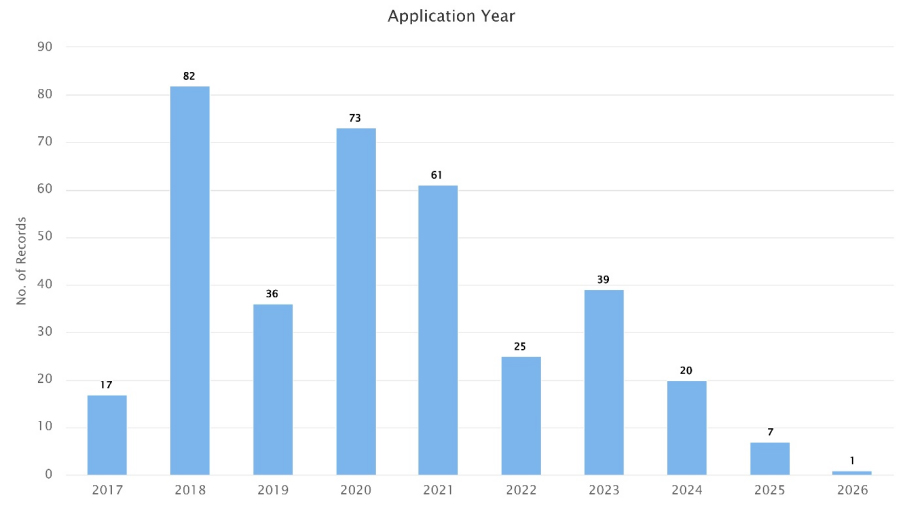
The graph above depicts the number of patent applications filed in the field of hantavirus treatment over time. The 2018 peak with 82 applications, the highest in the dataset did not emerge from a vacuum. It followed a series of hantavirus case clusters in Chile and Argentina in 2017 that attracted unusual international media attention, coincided with a post-MERS wave of investment in zoonotic pathogen research, and aligned with the maturation of several broad-spectrum antiviral platform technologies, particularly polymerase inhibitors originally developed for influenza, that were being evaluated against a wider range of RNA viruses. The result was a wave of exploratory filings wide in scope, broad in claim language, often more aspirational than clinical
Rather than crowding out hantavirus research entirely, the COVID-19 pandemic appears to have functioned as an involuntary subsidy for it. The 73 applications filed in 2020 the second-highest figure in the dataset reflect the activation of dormant programs, the repositioning of newly developed mRNA and antiviral platforms, and the reopening of regulatory and funding pathways that had previously been closed to neglected zoonotic diseases. Platform technologies developed at speed for COVID, immunomodulatory biologics, RNA interference approaches, AI-driven compound screening were directly applicable to hantavirus, and innovators moved quickly to file.
While COVID-19 remained the dominant global focus, many researchers viewed investments in zoonotic disease preparedness as broader public health infrastructure capable of supporting future responses to diseases with pandemic potential.
Key Players in Hantavirus Therapeutics
The ownership landscape in the treatment of Hantavirus is dominated by two players who account, between them, for the overwhelming majority of identified assignee-level activity and they could scarcely be more different from each other.
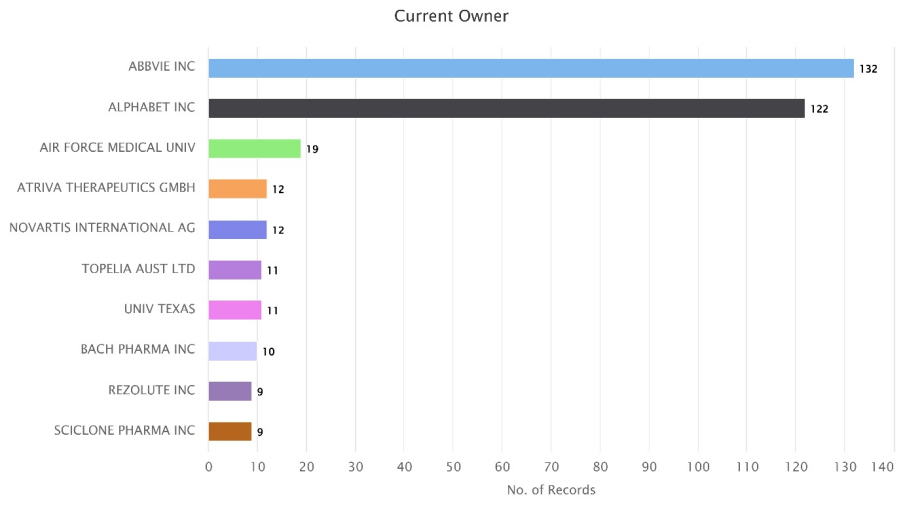
AbbVie Inc., with 132 patent records, leads the landscape but its presence here is not what it might initially appear. AbbVie is not primarily a virology company. It is one of the world’s foremost immunology and anti-inflammatory biologics developers, the maker of Humira and Skyrizi, with deep expertise in cytokine pathway modulation, IL-family signalling inhibition, and the pharmacology of inflammatory cascade control. Its patent position in the hantavirus space almost certainly reflects not a dedicated antiviral program but strategic portfolio covering immunomodulatory approaches that are directly relevant to hantavirus-induced cytokine storm the immunological crisis that kills most HPS patients. For any company developing a hantavirus treatment that includes an immunomodulatory component, an AbbVie portfolio encounter is essentially inevitable.
Alphabet Inc., with 122 records, is a more unusual presence and in some ways a more significant one. Through Verily and its constellation of AI-enabled life sciences platforms, Alphabet has built IP positions across computational diagnostics, biomarker identification, and AI-driven compound screening. Its patents in this space are upstream of clinical therapeutics but increasingly central to how modern drug discovery pipelines function. This expansion of international filing activity reflects growing recognition that hantavirus innovation is not solely a regional concern but an increasingly important component of global public health preparedness strategies.
World Map of Scientific Ambition
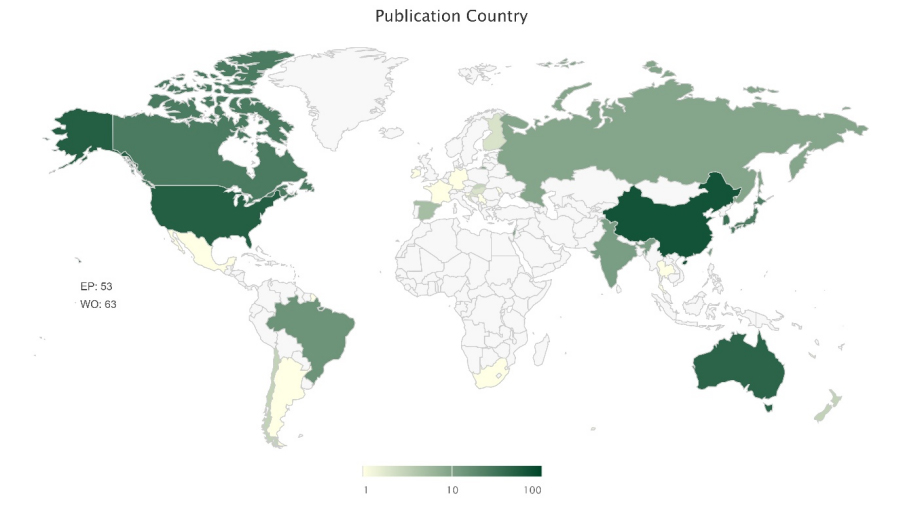
Hantavirus has evolved from a regionally concentrated infectious disease concern into a broader global public health and biodefense priority. The continued incidence of outbreaks, coupled with climate-linked changes in rodent ecology and human exposure patterns, has intensified international focus on surveillance, diagnostics, vaccine development, and antiviral preparedness.
The patent landscape reflects this broader strategic shift. China’s strong concentration of filings aligns with the country’s long-standing public health exposure to HFRS and sustained investment in domestic hantavirus research infrastructure. Meanwhile, significant use of the PCT route and continued prosecution in jurisdictions such as Europe indicate that innovators increasingly view hantavirus technologies as globally relevant commercial and strategic assets rather than region-specific healthcare solutions.
At the same time, filing activity across South Korea, Japan, Australia, and emerging jurisdictions points toward growing international participation in hantavirus innovation, spanning vaccines, antiviral therapeutics, diagnostics, immunological platforms, and outbreak management technologies.
Diagnostic Approaches
Laboratory confirmation of hantavirus infection relies on serologic and molecular methods:
- Serologic testing: Enzyme-linked immunosorbent assay (ELISA) detects IgM antibodies in acute infections. IgG antibodies appear later and persist, indicating prior or resolved infection
- Molecular diagnosis: Reverse transcriptase–polymerase chain reaction (RT-PCR) amplifies viral RNA from blood samples, providing rapid confirmation. Nested PCR targeting the large (L) segment of viral RNA confirms hantavirus infection and enables phylogenetic analysis
- Nucleic acid sequencing: Viral sequencing allows species identification and epidemiologic tracking, as demonstrated in the 2026 South African identification of Andes hantavirus
The identification of Andes hantavirus outside its traditional geographic context highlights the importance of genomic surveillance and rapid diagnostic capabilities for emerging infectious diseases. Early diagnosis is critical for HPS, as rapid clinical deterioration necessitates immediate intensive care intervention before laboratory confirmation.
Therapeutic Approaches: Current Limitations and Patent Opportunities
Critically, no specific antiviral agent or approved vaccine currently exists for hantavirus infection globally. Treatment remains supportive, centered on managing organ failure, hemodynamic collapse, and respiratory compromise. This therapeutic void creates substantial patent opportunities:
- Direct-acting antivirals: Inhibitors of the viral RdRp, N protein-RNA interactions, or glycoprotein-receptor binding represent unexploited targets
- Immunomodulatory agents: Interventions to temper the excessive immune activation and microvascular leakage characteristic of HPS pathogenesis
- Diagnostics refinement: Point-of-care tests enabling rapid triage in resource-limited settings
Global Health Context and Future Directions
Media attention surrounding the reported hantavirus pandemic 2026 discussions has largely been driven by isolated outbreaks and renewed interest in zoonotic disease preparedness rather than evidence of widespread global transmission.
The 2026 cruise ship outbreak and the ongoing endemic burden in Asia and Latin America underscore the continued relevance of hantavirus to global health. The hantavirus outbreak cruise ship update demonstrated how confined environments can accelerate epidemiological investigations, even when sustained person-to-person transmission is not observed. The cruise ship incident also highlighted the importance of rapid diagnostics and coordinated outbreak response protocols. Climate change, urbanization, and land-use modifications are expected to alter rodent ecology and potentially expand geographic ranges of infected rodent populations. Intensified surveillance, rodent control programs, and vaccine development remain critical public health priorities. Continued monitoring of travel-associated cases, including those linked to a cruise ship setting, will remain important as climate and ecological changes influence future patterns of exposure.
The patent landscape suggests that the next decade will likely see advancement of mRNA-based vaccines through clinical development, alongside continued exploration of viral vectors and next-generation diagnostic platforms. The therapeutic void the absence of specific antiviral therapies represents both a public health challenge and an underexploited patent opportunity for therapeutic innovation.
Conclusion
Hantaviruses demand our attention both as pathogens of substantial mortality and as intellectual property challenges at the forefront of vaccine innovation. The transition from foundational virology (1990s), through DNA vaccine platforms (2010s), to mRNA vaccine innovation (2020s) reflects the maturation of the scientific and patent landscape
As regulatory pathways mature and clinical efficacy is established, successful patent portfolios will likely center on mRNA or next-generation viral vector platforms, combined with strong composition-of-matter and method-of-use claims.